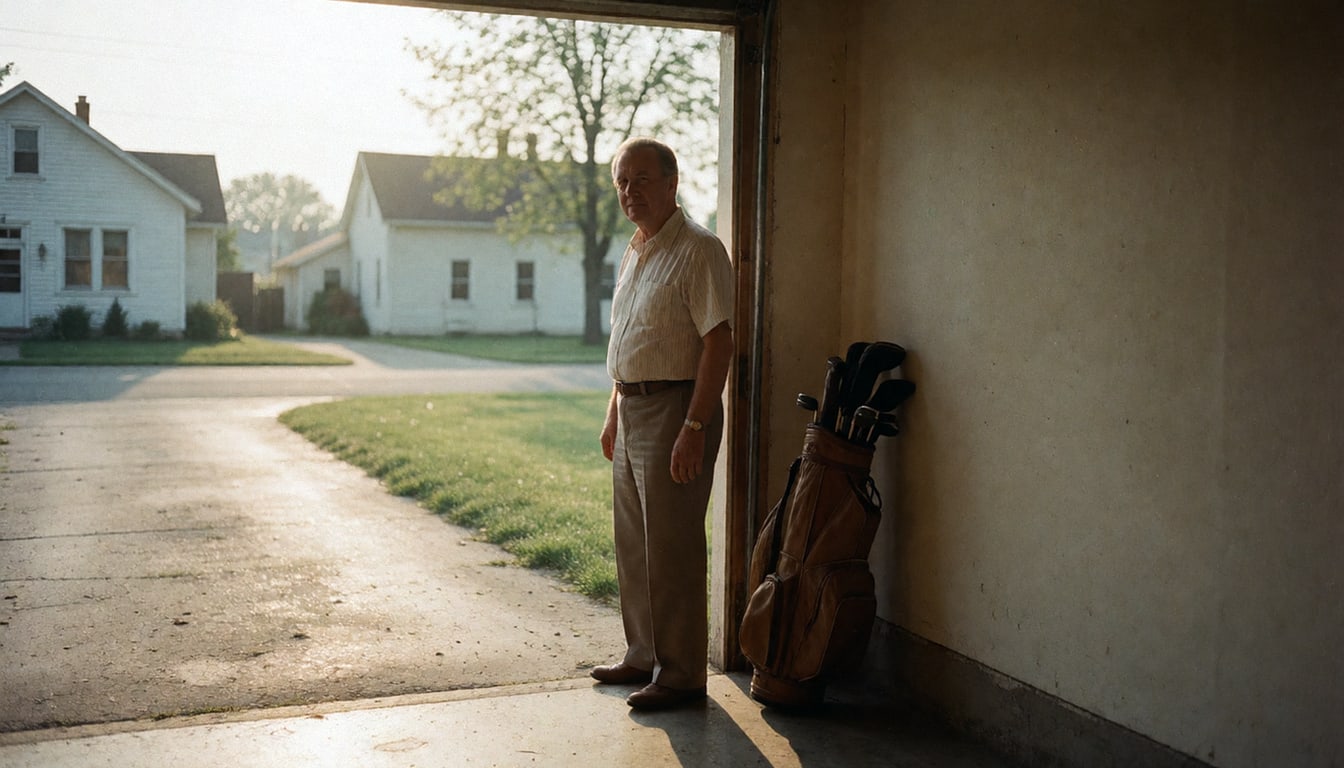

You have a meeting Thursday at two. Here is what to do with it.
No statements. No performance report. No allocation, no tax projection, no laptop open on the table. Ninety minutes and a legal pad you barely write on. I have opened relationships this way for a long time now, and the strange thing is that the meeting gets easier the less you bring to it.
This is the Vision meeting. It is the first of the four, and the other three are pointed at whatever comes out of it. Blueprint turns it into a plan across all five pillars. Build puts the plan in motion. Maintenance keeps it honest as life changes. Skip Vision and you spend the next twenty years managing a portfolio for a life you never asked about.
What follows is the actual sequence. Six questions, in order, with what tends to come back. Run it as written. You can make it yours after you have done it four or five times.
Before anyone sits down
Tell them what the meeting is, out loud, in the first thirty seconds. People arrive braced for a presentation and they need to be released from it.
I say: "There is nothing on the table today. No numbers, no statements. I want to spend the next ninety minutes on what the next twenty years are actually for, and then I will go build a plan around it. Is that all right with you?"
They almost always laugh a little, and one of them almost always says "that's a relief." That relief is the whole reason the meeting works. A person who is not being sold to says more.
If there are two of them, tell them the second rule too. "I am going to ask you both the same questions, and I want to hear both answers, even if they are different. Especially if they are different."
The six questions, in the order I ask them
One. What are you retiring to?
Not from. To. Say it in that direction and then stop talking.
What comes back is a pause. They have a detailed answer for the other version, the date and the number and the exact Friday, and they have almost nothing for this one. You will get golf. You will get grandkids. You will get travel with no country attached to it.
Do not rescue them. Most of us fill that silence in about four seconds, and the real answer was two seconds behind that. Count to ten in your head. What arrives after the pause is usually the first true thing said in the meeting.
Two. What is something you have been thinking about lately that has nothing to do with money?
This one feels awkward to ask. Ask it anyway.
What comes back is the identity question, dressed up as something smaller. A man who built a company for thirty one years tells you he does not know who he is at a dinner party once he cannot say the name of the business. A woman tells you she has been thinking about teaching. Somebody tells you their brother is not speaking to them.
None of that is on your agenda. All of it is going to shape the plan.
Three. If your health held up for another twenty five years, what would you do with them? And if it did not, what would you move up?
Ask both halves. The second half is where the meeting turns.
The first half gets you the good list. The second half gets you the honest one, and the order changes. Trips move earlier. The house sale moves earlier. Someone says the thing they have been carrying: a knee that is not getting better, a father who died at sixty eight, a physical they have skipped for four years running.
I am not a doctor and I never pretend to be. What I do is ask the question and then build the plan around the answer I actually got. A plan built for thirty years of retirement, held by someone who is on track for fifteen, is a plan for somebody else. Health is a financial variable whether or not it appears on the balance sheet. If the answer needs a specialist, that is what Collaborators are for, and you make the introduction rather than the diagnosis.
Four. Who else should be in this conversation who has never been in it?
The answer is almost always adult children, and the follow up almost always tells you why they have not been in it. "We do not want them to know the number." "We do not want them counting on it."
Fair. Here is what I say next. "You do not have to tell them a number. Would you be willing to tell them what you want the money to do?"
That gets a yes far more often than the first version. And a room with two adult children in it, hearing their parents describe what they are trying to build rather than what they are leaving, is a different room than the one everybody was dreading.
Five. What is in the way?
Short question, long answer. This is where the constraints come out, and they are rarely financial. A business with no second in command. A house nobody wants to be the one to sell. A promise made to a sibling in 1998. A spouse who has never said out loud that they do not want to spend six months a year in Arizona.
Write these down properly. They are the real design brief.
Six. If we do this well, what does one ordinary Tuesday look like in five years?
Not the highlight reel. The Tuesday. Where are you when you wake up, who is in the house, what do you do before lunch.
This is where people get specific in a way they cannot manage when you ask about goals. Somebody describes walking to a coffee place at seven and coming back to a workshop with a boat in it. Somebody describes a granddaughter at the kitchen counter on a school morning. Not every dream costs money, and this question is where you find out which ones do.
What you do with the answers
Everything from those ninety minutes goes onto the Dream Board. Inspiration and intention together, in their words, not summarized into planner language. If she said "within an hour of the grandchildren," the Dream Board says within an hour of the grandchildren. It does not say relocation objective.
Then you sort it, and this is the part that makes the Blueprint straightforward instead of daunting. Every item from the meeting goes under one of the five pillars. Wealth, Purpose, Health and Longevity, Experiences, Legacy. The teaching idea sits under Purpose. The knee and the skipped physical sit under Health and Longevity. The trip that moved up sits under Experiences. The conversation with the adult children sits under Legacy. The number that funds all of it sits under Wealth, where it belongs, serving the rest rather than standing in for it.
Now you have a Blueprint brief. Six to ten items, each attached to a pillar, each in the client's own words, each with a timeline that came from them. That is what you take away and turn into the plan. Wealth is the vehicle. This is the part where you finally know the destination.
One more thing about Vision that took me years to understand. Advisors resist it because it feels like giving away a meeting, ninety minutes with no deliverable. What actually happens is that the numbers meeting gets faster, because by then you know what the money is for. And people consolidate when the relationship goes deep enough to make it obvious. They were never hiding accounts from you. They were answering the questions you asked.
Ask these six on Thursday. Then go build the thing they described.